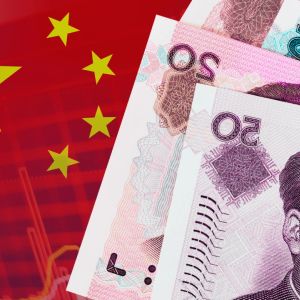
China and Indonesia have created a shared QR code payment system, allowing shoppers in both countries to pay with their own money, eliminating the need for a dollar. The initiative is part of a bigger Chinese effort to integrate Southeast Asian economies and undercut the US dollar’s influence in global trade. According to the new arrangement , Chinese citizens can use apps like Alipay to point their phones at a QR code in Indonesia and pay in yuan. Indonesians can do the same by using their country’s QRIS platform and paying in rupiah. Neither side is required to convert to dollars initially. A growing regional network Indonesia’s central bank announced the launch on Thursday, adding to the increasing number of Southeast Asian countries that have tapped into China’s booming digital payments network. Thailand implemented a similar scheme for Chinese tourists in late October, allowing them to pay local shops in yuan using their home applications. Vietnam introduced UnionPay in December and added Alipay last month. Malaysia and Singapore already have similar setups in place. Alicia Garcia-Herrero, chief economist for Asia-Pacific at French investment bank Natixis, described the Indonesia link-up as a practical move that lowers transaction costs and takes some of the currency risk off the table for both sides. “For Beijing, the primary drivers appear to be advancing dedollarisation efforts, promoting the international use of the yuan and strengthening economic integration with key Asean partners amid broader geopolitical pushes for financial autonomy,” she said. The push for financial independence comes as the Indonesian rupiah is under strain. The dollar-to-rupiah exchange rate recently was at Rp17,416.70, up 0.51% for the day. Analysts tracking the pair say it has been holding above its 20-day, 50-day, and 200-day moving averages, with some traders expecting a break over the Rp17,500 resistance mark. The data supporting the local-currency commerce trend are impressive. In the first two months of 2026, ASEAN countries settled $8.45 billion in cross-border trade in their own currencies, up 163% from the same time in 2025. The majority of such activities occurred in Singapore, Thailand, Indonesia, Malaysia, Vietnam, and the Philippines. The region is also constructing a shared infrastructure known as the Regional Payment Connectivity system, which will process 12.9 million transactions in the first half of 2025. Tariff cuts add weight to the push China has integrated digital payment expansion with trade policy reforms. Customs offices across the country have been grappling with a surge of imports under a broader zero-tariff program. Officials believe that final prices for certain commodities covered under the initiative will fall by 15% to 20%, decreasing costs for businesses that buy from China. These developments are consistent with the image painted by Goldman Sachs in a study released on January 5. Chief China economist Hui Shan noted that Chinese exporters have done well in finding buyers outside the United States, and that trend, along with a diminishing drag from the real estate industry, supports a stronger-than-expected growth outlook. Goldman Sachs forecasted Chinese economic growth above consensus, as well as monetary easing, fiscal spending, and exports. According to Garcia-Herrero, Beijing plans to add additional ASEAN nations and other partners to its digital payment network this year, as it continues to extend its financial footprint in the region. All of this is set against the backdrop of a global commercial environment that has seen several countries advocate for tariffs and limited market access. Meanwhile, China has positioned itself as a stable hub with solid supply chains and an open trade policy, emphasizing the contrast as other big economies become more protective of their own markets. It remains to be seen if these payment ties and trade deals will permanently transform the dollar’s role in Asian commerce, but the rate at which they are being implemented implies Beijing has no intention of slowing down. This expansion suggests that the integration of local currency systems is becoming a standard feature of trade across the region. Don’t just read crypto news. Understand it. Subscribe to our newsletter. It's free .