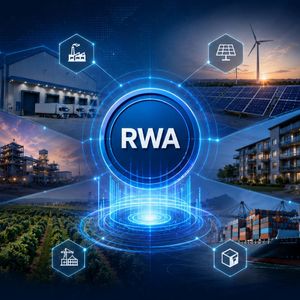
RWA tokenization in 2026 covers everything from US Treasuries to real estate. Most of the $30 billion-plus in RWA TVL sits in Treasury-backed products from BlackRock, Ondo, and Franklin Templeton. The smaller and structurally distinct slice tokenizes ongoing productive operations: businesses that generate cash flow from real economic activity. This piece covers eight protocols actively tokenizing real-world operations in 2026, with the underlying activity each one converts to on-chain returns. What Counts as a "Real-World Operation" A real-world operation is an ongoing productive activity that generates cash flow. The category includes credit operations (lenders making loans, collecting interest), commodity production (mines, farms, energy plants), and service operations (reinsurance, asset management). This excludes pure financial assets like Treasury bills (claims on government debt) or tokenized stocks (claims on equity). The distinction matters because operational cash flow carries different risk and correlation profiles than passive financial claims. RWA tokenization of operations connects DeFi capital to real productive activity in a way that Treasury-backed tokens structurally don't. 1. Centrifuge: The Original RWA Credit Protocol Centrifuge tokenizes private credit and invoice-financing operations. Borrowers (mostly fintechs and real-world business lenders) post collateral and access on-chain capital. Investors fund the pools and receive yield from interest payments. The protocol has been a foundational RWA player since 2018, with TVL growing past $400 million in 2026 across pools tied to invoice factoring, real estate bridge loans, and trade finance. What makes Centrifuge distinct is operational specificity. Each pool tokenizes a particular business operation, not a generic RWA basket. Investors aren't buying exposure to a broad category; they're funding a specific lender's loan book. This level of granularity is unusual in DeFi credit and reflects the protocol's long focus on connecting on-chain capital to specific real-world businesses. 2. Goldfinch: DeFi's Window into Underbanked Market Lending Goldfinch tokenizes private credit operations focused on lending to businesses in developing markets. Borrowers are typically non-bank lenders operating in Africa, Latin America, and Southeast Asia. The protocol funds these lenders, who then deploy capital to local businesses. TVL crossed $1.31 million in 2026, with active loans to lenders across multiple regions. Yield to investors typically falls in the 8% to 12% range, reflecting both the operational cash flow and the credit risk profile of cross-border lending in underbanked regions. The distinct angle is geographic. Most DeFi credit lives in dollar-denominated developed-market lending. Goldfinch deliberately funds operations in markets traditional crypto credit doesn't reach, giving on-chain capital direct exposure to lending businesses across underbanked regions. 3. Ayni Gold: Tokenized Gold Mining Production from Peru Ayni Gold tokenizes gold mining production at the Minerales San Hilario concession in Peru. Token holders who stake AYNI receive PAXG rewards quarterly from the protocol's mining output. The protocol launched with smart contract audits from CertiK and PeckShield in October 2025, with custody handled by TurnKey infrastructure for in-app wallets. The 8 km² concession is registered with INGEMMET (Peru's mining authority) with a 2025 Kangari Consulting scoping study estimating 9 to 10.7 tonnes of conceptual recoverable gold. Ayni is the most prominent example of production-linked yield in DeFi. The operations being tokenized are physical: gold extraction, processing, sale through Peruvian banking channels, and conversion to PAXG for staker distributions. The model gives investors gold backed crypto yield without requiring direct holdings of stored bullion. 4. Maple Finance: Institutional Credit with Real Underwriting Maple tokenizes institutional credit operations. The protocol's pools fund lending to institutional borrowers, primarily crypto-native trading firms and increasingly traditional fintech companies through 2025-2026. Maple's syrupUSDC token represents a yield-bearing position in these institutional credit pools. Deposits crossed $2.2 billion in 2026, with yields typically in the 4% to 5%range. What sets Maple apart from Centrifuge or Goldfinch is the underwriting layer. Each loan goes through institutional underwriting before deployment, which has produced a stronger track record than pool-based DeFi credit during the 2022-2023 stress period. The operations being tokenized are professional credit underwriting plus institutional borrower performance, with returns flowing to syrupUSDC holders as borrowers repay interest into the pools. 5. Cireta: Production-Backed Industrial Metals with Insurance Cireta tokenizes copper, lithium, and other critical minerals production. The platform offers production-backed tokens tied to active mining operations instead of vault storage. The structural distinction from vault-backed commodity tokens is the model itself. Investors receive economic rights to commodity output with optional physical delivery, plus 105% credit risk insurance backed by Swiss Re, Munich Re, and Lloyd's. The platform sits at the smaller end of the tokenized commodities market ($75 million total tokenized industrial metals as of early 2026), but represents the structural shift from vault-backed to production-backed commodity exposure. The category is small but growing fast. Critical minerals demand is reshaping mining markets globally as electrification continues, which positions Cireta's model in a category with substantial expansion potential. 6. Agrotoken: $164M in Tokenized Latin American Harvests Agrotoken tokenizes agricultural commodities, primarily soy, corn, and wheat. Each token represents one metric ton of stored crop verified in approved warehouses across Latin American markets. The protocol has digitized approximately $164 million in agricultural harvests, with operations concentrated in Argentina and other South American agricultural producers. The model bridges Argentine agricultural production to on-chain capital, letting farmers tokenize stored harvest as collateral or for direct sale. The operations being tokenized are agricultural production cycles, plus warehouse storage and verification. Yield mechanics differ from DeFi-native protocols since returns come through commodity price movements and agricultural finance flows tied to harvest cycles. Agrotoken demonstrates the operational tokenization model working in agricultural sectors well outside DeFi's typical focus on credit and trading. 7. RealT: Tokenized Rental Income from Real Properties RealT tokenizes residential rental property operations. The protocol fractionalizes ownership of specific rental properties, with token holders receiving daily rental distributions paid in stablecoins. Each property gets its own token series, tied to a specific physical property with verified ownership and active rental tenants. Investors can hold fractions of multiple properties across the platform's portfolio, with rental income flowing to token holders proportionally to their position size. The operations being tokenized are property management and tenant rent collection. Returns reflect actual rental yields net of property expenses, taxes, and management fees. RealT has been operating since 2019 and has established the model for tokenized residential rental operations, offering retail investors access to real estate cash flow without traditional property ownership barriers. 8. Re Protocol: Bringing Reinsurance Yield On-Chain Re Protocol tokenizes reinsurance operations, letting on-chain capital fund reinsurance contracts that traditionally required institutional access. The protocol underwrites reinsurance contracts using on-chain capital pools, with returns flowing to capital providers from reinsurance premiums. TVL has grown past $264 million in 2026, with the protocol underwriting contracts across property catastrophe and specialty insurance lines. The reinsurance category is structurally distinct from credit or commodity tokenization. Returns come from underwriting profits (premium income minus claim payouts), which carry zero correlation with crypto markets, USD interest rates, or commodity prices. This project gives DeFi capital access to a yield source that has historically been institutional-only, with insurance industry returns now flowing through smart contracts to on-chain capital providers. The 8 Protocols Across Operations, Yield, and TVL The full comparison sits in the table below. Protocol Operation type TVL 2026 Yield mechanic Typical returns Centrifuge Invoice/private credit $400M+ Pool interest 6-10% Goldfinch Cross-border credit $200M+ Pool interest 8-12% Ayni Gold Gold mining production Variable Quarterly PAXG Variable Maple Finance Institutional credit $2B+ NAV accrual 7-8% Cireta Industrial metals $75M+ Production-backed Varies by mineral Agrotoken Agricultural production $164M Warehouse-backed Commodity exposure RealT Residential rentals $156M+ Daily distributions 6-10% net Re Protocol Reinsurance underwriting $264M+ Premium income 8-15% What Operational RWA Means for DeFi Allocators in 2026 Real-world operations span credit, commodities, agriculture, real estate, and insurance. Each category produces cash flow tied to economic activity outside crypto markets, which gives on-chain portfolios a yield source structurally different from anything denominated in crypto trading or interest rate cycles. The eight protocols above represent the active edge of RWA tokenization in 2026, taking the category past Treasury bills into operational sectors that produce returns from genuine business activity. For DeFi portfolios looking for gold backed DeFi yield alongside operational credit, agricultural production, or reinsurance exposure, the category gives a real menu of options. Most thoughtful allocations include positions across multiple operational categories instead of concentrating in any single one. Disclaimer: This article is provided for informational purposes only. It is not offered or intended to be used as legal, tax, investment, financial, or other advice.