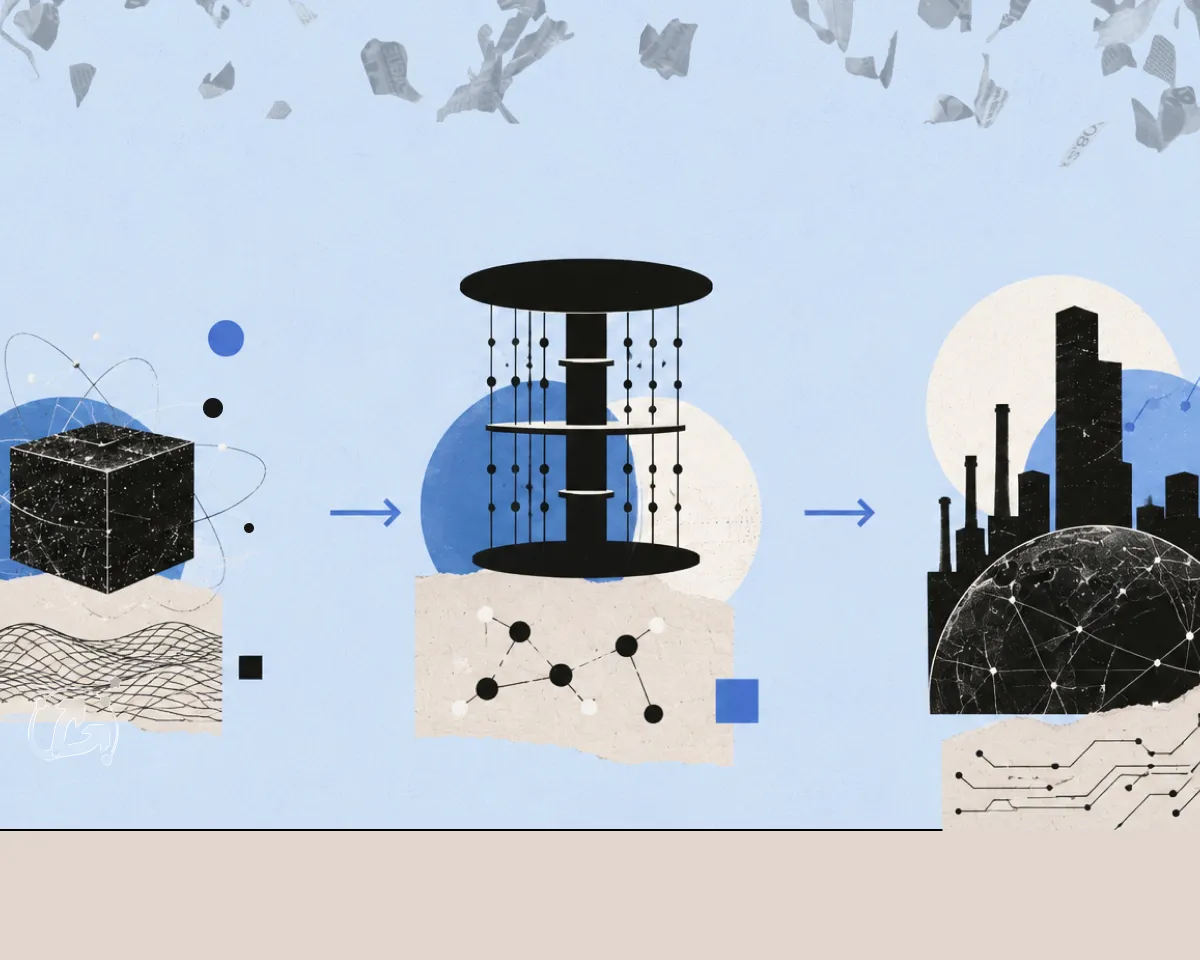
Impact investment firm Kula has signed an MoU with Lionhart Capital to advance a proof of concept that raises structural questions about how the $31 billion RWA market operates Quick Answer Editor's note: Most of what gets called RWA tokenisation today would not survive a serious legal challenge. The token points at an asset held in an SPV or trust, and the holder's rights depend on the solvency and cooperation of an intermediary. The model put forward by an investment firm called Kula issues title rather than a reference. The regulatory infrastructure required to do that is genuinely rare. Whether the market re-rates on that distinction is an open question. Kula, a decentralised impact investment firm, has signed a Memorandum of Understanding with Lionhart Capital to advance a proof of concept in regulated title tokenisation of real-world assets. The tokenised RWA market has grown 256% in 15 months, reaching $31 billion by the end of Q1 2026. The majority of that growth has been built on referential or contractual tokenisation models. Kula's announcement is a challenge to the structural assumptions underlying those models. What does title tokenisation mean in practice? In most RWA tokenisation structures, the token represents a contractual claim on an asset held in a Special Purpose Vehicle, trust, or custody arrangement. The holder's rights are defined by legal documents and enforced by administrators and courts. The on-chain ledger records the transaction, but ownership resolves outside it. Kula's model issues ownership rights directly on-chain, recognised by the relevant regulatory authority. The token carries the economic and legal title to the underlying asset rather than a reference to it. In liquid, rising markets the difference between these two structures is rarely tested. Under stress, the distinction determines whether a token holder can exercise rights independently or must pursue claims against an intermediary that may itself be under pressure. Why this is a constraint most of the market has avoided Issuing title rather than a contractual reference requires operating through a licensed Virtual Asset Service Provider under a recognised regulatory framework. The majority of the tokenisation market operates as a technology provider rather than a regulated issuer. The compliance infrastructure required to cross that threshold takes considerable time and capital to build. Kula has deployed millions in underlying asset value across projects in East Africa, Nepal, and Zambia, developing regulated governance infrastructure across that period. The title tokenisation initiative applies that existing infrastructure to a new context rather than introducing a new operating model. Institutional adoption and the case for regulated issuance As larger capital allocators increase exposure to tokenised assets, the legal character of the token itself is likely to become a standard element of due diligence. The question of whether a token constitutes genuine title or a contractual claim on an entity holding title has material implications for risk classification, enforcement, and recovery in default scenarios. What remains to be confirmed The structural argument for title tokenisation over referential models is well-founded. Whether Kula can demonstrate it at meaningful scale is what the proof of concept is designed to establish. For the broader RWA market, the more significant variable is timing. If a period of sustained stress arrives before institutional adoption has driven regulatory issuance standards higher, the gap between referential and title tokenisation will become visible in ways the current market has not yet had to price. Disclaimer: This article is provided for informational purposes only. It is not offered or intended to be used as legal, tax, investment, financial, or other advice.